

Why You Should Focus Less on Biceps and Triceps and More on Bigger Calorie-Burning Muscles
Walk into almost any gym and you will see the same pattern. Someone finishes a few sets of curls, moves to triceps pushdowns, then adds more curls from another angle. Their arms may get a great pump, but the rest of the body barely works.
There is nothing wrong with training biceps and triceps. Strong arms help with pulling, pushing, carrying, and looking the way many people want to look. The problem starts when arm isolation takes up the best part of a session while the big muscle groups get rushed, skipped, or added as an afterthought.
If the goal is fat loss, better body composition, more strength, or a more athletic build, the larger muscle groups deserve priority. Legs, glutes, back, chest, and shoulders use more total muscle mass. They usually demand more effort, more oxygen, and more energy. That means they can help you burn more calories during training and support better long-term progress.
This article is informational only. If you have an injury, medical condition, or you are new to training, get personalised guidance before changing your programme.

Small muscles matter, but they should not run the session
Biceps and triceps are smaller muscle groups. They recover fairly quickly, they are easy to feel working, and they give an immediate pump. That quick feedback can make arm training feel more productive than it really is.
A set of cable curls can burn energy, of course. Any movement does. But compare it with a set of squats, Romanian deadlifts, lunges, pull-ups, or rows. Those bigger lifts involve more joints and more muscle tissue. They also tend to raise your heart rate more, especially when performed with good effort and sensible rest periods.
The issue is not that curls are “bad”. The issue is opportunity cost.
If you have 45 to 60 minutes to train, every exercise takes up time, focus, and recovery. Spending 25 minutes on arms may leave you with too little energy for the work that delivers the biggest return.
Think of biceps and triceps as support players. They still have value, but they should not take over the match.
Bigger muscles usually burn more calories because they do more work
Calorie burn during strength training is not as simple as one exercise beating another every time. Load, tempo, rest, range of motion, fitness level, and effort all matter. Still, a useful rule holds true: the more muscle mass you train, the more energy the body tends to use.
Large muscle groups include:
Glutes
Quadriceps
Hamstrings
Back muscles
Chest
Shoulders
Core muscles that brace and stabilise
When these areas work together, the body has to produce more force and control more movement. A heavy goblet squat, for example, asks the quads, glutes, hamstrings, core, upper back, and grip to contribute. A biceps curl mainly asks the elbow flexors to work.
That difference matters if the goal is to train efficiently.
Exercise type | Main muscles involved | Energy demand |
Biceps curl | Biceps and forearms | Lower compared with big compound lifts |
Triceps pushdown | Triceps | Lower compared with big compound lifts |
Squat pattern | Quads, glutes, hamstrings, core, back | Higher due to more total muscle mass |
Row or pull-up | Back, biceps, rear shoulders, core | Higher due to upper-body pulling demand |
Deadlift pattern | Glutes, hamstrings, back, core, grip | Higher due to full-body effort |
Bigger lifts also build strength that carries over into daily life. Strong glutes and legs help with stairs, lifting, sport, and posture. A stronger back helps with pulling, carrying, and shoulder health. A stronger chest and shoulders improve pressing power.
Arms still grow during many compound movements. Rows, pull-ups, chin-ups, and pulldowns train the biceps. Press-ups, bench press, dips, and overhead press train the triceps. That does not mean isolation is useless, but it means direct arm work is often the extra, not the foundation.

The most useful lifts are the ones that train several muscles at once
If training time is limited, start with compound movements. These are exercises that move through more than one joint and involve several muscle groups. They give you more work per minute.
You do not need to train like a powerlifter or bodybuilder to benefit. You can use barbells, dumbbells, kettlebells, machines, cables, or bodyweight. The best version is the one you can perform safely, consistently, and with enough challenge.
Lower-body exercises should get serious attention
The lower body contains some of the largest muscles in the body. If calorie burn and body composition are priorities, skipping leg training is a poor trade.
Good options include:
Squats
Leg press
Lunges
Step-ups
Romanian deadlifts
Hip thrusts
Split squats
Hamstring curls
A proper lower-body session is demanding. It may not deliver the same mirror pump as curls, but it often gives a bigger training effect. It also helps build a balanced physique. Large arms on a weak lower body rarely look as athletic as people expect.
Pulling exercises train the back and arms together
Pulling movements are a smart way to work the biceps without making them the whole focus. A row or pull-up trains the back first, while the biceps assist.
Strong pulling work can include:
Lat pulldowns
Assisted pull-ups
Dumbbell rows
Chest-supported rows
Cable rows
Inverted rows
These movements build the lats, traps, rhomboids, rear shoulders, forearms, and biceps. They also help balance pressing work, which matters if someone does lots of bench press, press-ups, or shoulder press.
Pressing exercises train the chest, shoulders, and triceps
The triceps work hard during presses. That is why many people do not need endless pushdowns to make progress.
Useful pressing choices include:
Bench press
Dumbbell press
Incline press
Press-ups
Dips, if shoulders tolerate them well
Overhead press
Machine chest press
Pressing with good technique builds the chest and shoulders while giving the triceps plenty to do. Add direct triceps work later if needed, not before the main lifts.
Carries and full-body movements raise the demand
Loaded carries, sled pushes, kettlebell swings, and similar movements can be excellent for calorie-burning sessions. They are not magic, and they still need good form, but they ask a lot from the body in a short amount of time.
Examples include:
Farmer’s carries
Suitcase carries
Sled pushes
Kettlebell swings
Medicine ball slams
Battle ropes
These are best used after strength work or as part of a conditioning block. They can be intense, so start lighter than you think and build up.
A better weekly training split puts large muscles first
A common mistake is training in the order of preference rather than priority. If arms are fun, they get done first. Legs get pushed to the end. Back work gets squeezed in. Conditioning disappears.
A more effective structure starts with the biggest, hardest work while energy is highest. Arm isolation can still appear, but later in the session or on shorter accessory days.
Here is a simple three-day strength plan that works for many general fitness goals.
Day | Main focus | Example session |
Day 1 | Lower body and push | Squat or leg press, Romanian deadlift, bench press, lunges, triceps finisher |
Day 2 | Pull and posterior chain | Row, pulldown or assisted pull-up, hip thrust, hamstring curl, biceps finisher |
Day 3 | Full body | Deadlift variation, overhead press, split squat, cable row, carries |
For four days per week, use an upper and lower split.
Day | Focus |
Day 1 | Lower body with squat emphasis |
Day 2 | Upper body with push and pull |
Day 3 | Lower body with hinge emphasis |
Day 4 | Upper body with back, chest, shoulders, and optional arms |
This structure gives bigger muscles repeated attention across the week. It also keeps arm work in the plan, which is useful for strength, balance, and aesthetic goals.
A good rule of thumb is to spend most of the session on big lifts and a smaller portion on isolation. For many people, that might look like 70 to 80 per cent compound work and 20 to 30 per cent accessory work. That is not a strict law, but it is a helpful starting point.
Arm training still has a place when it supports the goal
Direct biceps and triceps work can be useful. It can help with muscle growth, elbow strength, pressing strength, pulling strength, and physique goals. The key is dosage.
A smart arm finisher might be as simple as:
Two to three sets of curls
Two to three sets of triceps extensions or pushdowns
Controlled reps
Short rests
Good range of motion
That is enough for many people, especially when compound pulling and pressing already appear in the programme.
If arms are a priority for appearance, train them with intent, but do not let them steal recovery from larger muscle groups. More arm volume is not always better. Elbows and wrists can become irritated when curls, pushdowns, skull crushers, and dips pile up without balance.
Progress comes from repeated quality work, not from turning every session into an arm day.
Change the order before changing the whole programme
Many people do not need a completely new routine. They just need to change the order and emphasis.
If a current session looks like this:
Biceps curls
Triceps pushdowns
Lateral raises
Chest press
A few rushed leg extensions
Ten minutes of cardio if there is time
Try reversing the logic:
Squat, leg press, or deadlift variation
Row or pulldown
Chest press or overhead press
Lunge, hip thrust, or hamstring work
Core or carries
Brief arm finisher
The second version trains more total muscle, uses the best energy on the hardest work, and still leaves room for arms. It also makes each session feel more purposeful.
This shift can be uncomfortable at first. Big lifts are harder. They require more focus, setup, and rest. They do not always produce the same satisfying pump in one small area. But they give more back over time.
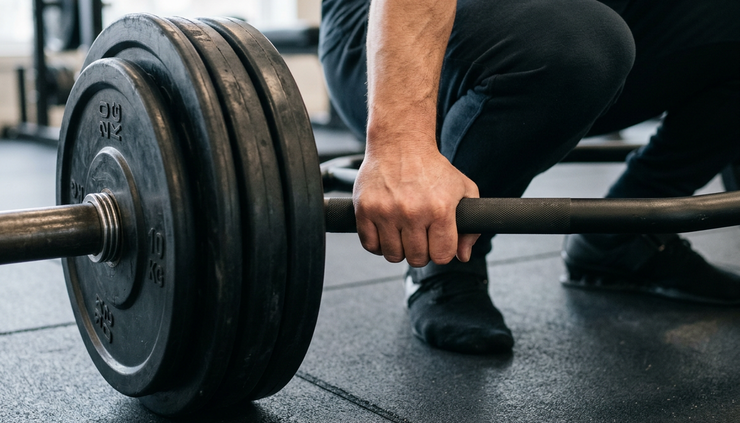
The takeaway is simple
If most of a workout goes towards biceps and triceps, the programme is probably leaving results on the table. Arms matter, but they are small compared with the legs, glutes, back, chest, and shoulders.
For better calorie burn, stronger training sessions, and a more balanced body, put the largest muscle groups first. Build sessions around squats, hinges, rows, presses, lunges, carries, and pulldowns. Then add curls and triceps work at the end.
The best training plan is not the one with the biggest arm pump. It is the one that gives the biggest return for the time and effort you put in.


Comments